
Why your salon ads bring in students, not clients
You put £80 behind a post. The phone buzzed. It was someone asking if you take students for a discount. Then someone asking if you need models for their college portfolio. Then someone asking if you’re hiring.
Nothing was broken. This is exactly what loosely-targeted salon advertising does, every time, and it’s why so many owners decide “ads don’t work” after one burned month. The ads work fine. They were just shown to the wrong people — and you paid for every one of them.
Why it happens
There are two versions of this problem.
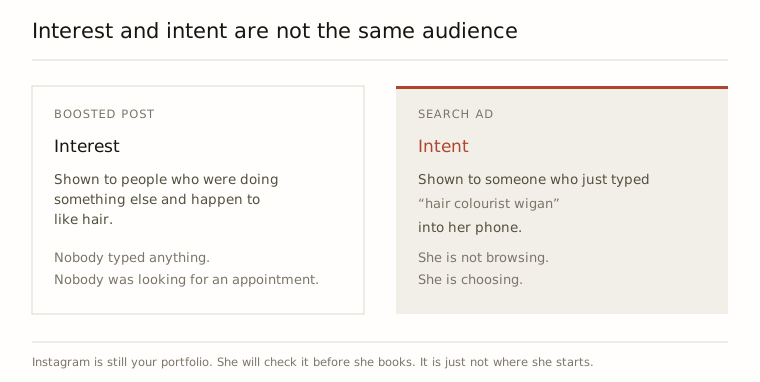
Boosted posts target interests, not intent. When you boost, you’re asking Meta to find people “interested in hair”. That bucket contains your future clients — and every hairdressing student, every apprentice hunting for a chair, every hobbyist who watches tutorial videos, and every freebie hunter within ten miles. None of them typed anything. Nobody in that audience was looking for an appointment.
Loose search ads pay for anything containing your words. Google’s own quick setup (the “get more customers” button inside your Business Profile) runs on broad matching. You say “hair salon”, and Google decides that “hairdressing courses near me”, “salon jobs wigan” and “balayage tutorial” are all close enough. Each of those clicks costs you the same £1 to £3 as a real client’s click — and Google’s quick setup gives you no proper way to say no.
Who’s actually clicking
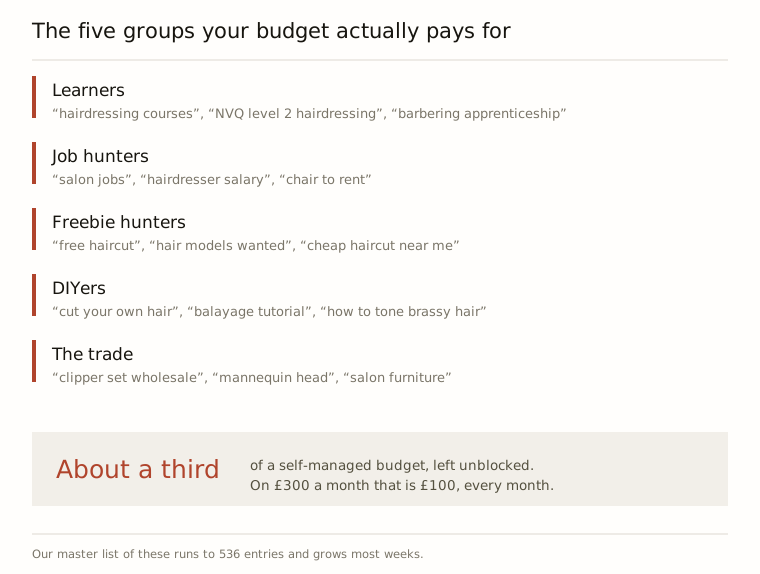
Across salon accounts, the money leaks to five groups, none of whom will ever sit in your chair as a paying client:
- Learners — “hairdressing courses”, “NVQ level 2 hairdressing”, “barbering apprenticeship”
- Job hunters — “salon jobs”, “hairdresser salary”, “chair to rent”
- Freebie hunters — “free haircut”, “hair models wanted”, “cheap haircut near me”
- DIYers — “cut your own hair”, “balayage tutorial”, “how to tone brassy hair”
- The trade — “clipper set wholesale”, “mannequin head”, “salon furniture”
Our master list of these has five hundred and thirty-six entries, and it grows most weeks. Left unblocked, they quietly eat roughly a third of a self-managed budget. On £300 a month, that’s £100 paid, every month, for people who wanted a course, a job or a tutorial.
The fix is boring, and it works
Every one of those searches can be blocked, by name, before your first click ever runs — Google calls them negative keywords, but all you need to know is that “courses” can be told to never see your ad again. The proper order of work:
- Block the list before spending anything. All five hundred and thirty-six, on day one.
- Run only precise match types, so “balayage wigan” qualifies and “balayage tutorial” doesn’t get near you.
- Read the search terms weekly. Google shows you the actual phrases people typed before clicking. Anything wasteful gets added to the blocklist. This fifteen-minute habit is where the compounding happens.
A starter blocklist you can copy
If you’re running ads yourself, add these as negative keywords today — it takes ten minutes and will likely save you more this month than anything else you could do:
course, courses, academy, training, apprenticeship, NVQ,
qualification, tutorial, how to, DIY, at home,
jobs, job, vacancy, salary, career, hiring,
model, models wanted, free,
wholesale, supplier, kit, clippers, mannequin
That’s the top of the list, not the whole of it — the long tail is where the last third of the waste hides, and it’s different for colour specialists than for barbers.

If you’d rather never think about this again
This is the single most valuable thing we do, and it’s included at every price: the full list blocked before your first click, then weekly pruning from your real search terms. The forty-second assessment shows you the time-wasting searches we’d block near your postcode — alongside how many real clients are searching, and what an enquiry should cost. No account, no card. And if you’re weighing up doing it yourself, the plain-English guide to Google Ads for hairdressers walks the whole thing end to end.
Questions people ask
Does blocking a search cost anything?
No. Negative keywords are free to add and there is no limit worth worrying about. The cost runs entirely the other way: every search you have not blocked is one Google can charge you for, at the same rate a real client's click costs.
Will blocking that much shrink my traffic too far?
Your impressions fall and your clicks fall. What does not fall is bookings, because the clicks you removed were never going to become one. The number to watch is cost per enquiry rather than clicks. Fewer, better clicks is the whole point of doing it.
Can I get money back for the wasted clicks I have already paid for?
No. Google charges for a click when it happens, and a course hunter's click is as billable as a client's. The exception is clicks Google itself judges invalid, which it filters automatically and does not charge for. Everything else is recovered by blocking it before the next one.