
Why your salon does not show up on Google Maps
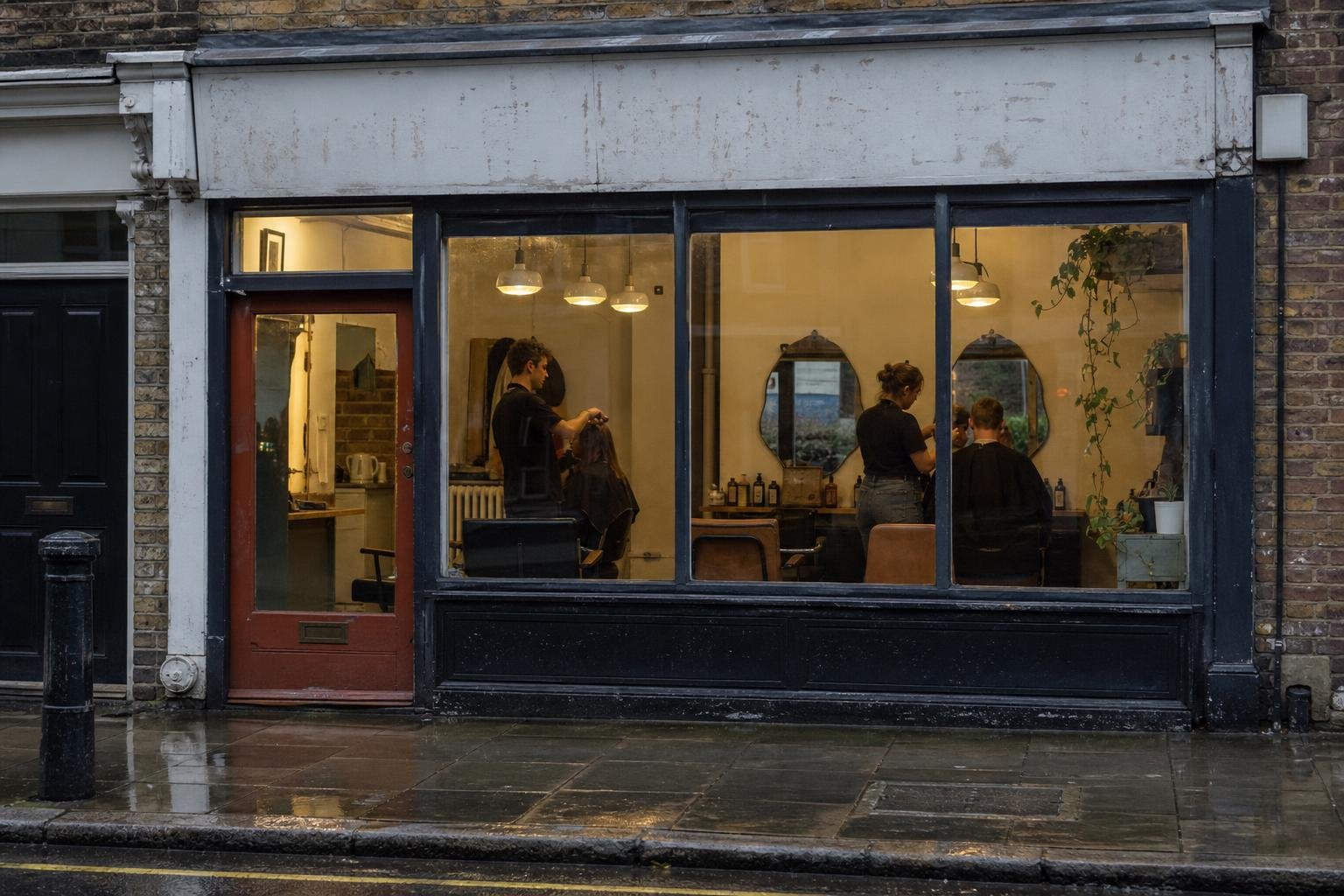
If your salon is nowhere on Google Maps, that is almost never a ranking problem. A listing that ranks badly still turns up when you search the salon’s own name and town. One that turns up nowhere at all has failed one of four checks, and Google publishes every one of them.
So work down them in order rather than guessing. Most salons find the answer in the first two, and the fix costs an afternoon and nothing else.
First, make sure it really is missing
Search your salon’s name and your town, not hairdressers near me. A name-and-town search tests whether the listing exists. A near me search tests where it ranks, which is a different problem with a different answer.
Do it while signed in to the Google Account the profile sits under, because Google’s own instruction for finding your profile is that you have to be signed in to that account. Plenty of owners are looking from a personal Gmail while the listing lives in an old account nobody has opened since the salon opened.
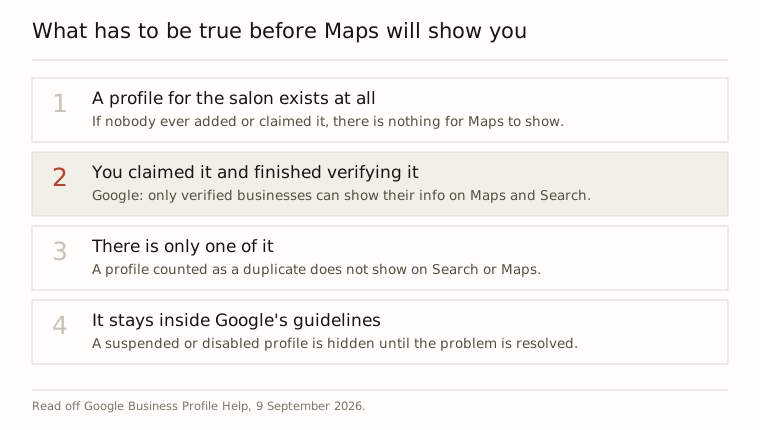
Then give it time. Google says changes to your business information can take up to 3 days to appear, and that rankings for a new business can take up to a month to show in search results. If you set the profile up on Tuesday, Friday is too early to draw any conclusion at all.
Nobody ever finished verifying it
This is the common one. Google’s wording is flat: only verified businesses can show their business info on Maps and Search. Not rank well. Show.
You do not get to pick how you verify. Google says verification methods are chosen automatically and cannot be changed, and that the options you are offered depend on your business type, your public information, your region and your hours. Where video verification is offered, Google recommends taking it. Once you have finished the steps, review can take up to 5 business days.
If you were sent a postcard, three details decide whether this works. Most codes arrive within 14 days. Codes expire after 30 days. And while you are waiting, do not edit your business name, address or category, because Google says the code it posted will then not work, and do not request a second code, because that cancels the one already in the post.
That last pair catches salons constantly. The postcard is somewhere in the Royal Mail, she has a quiet Tuesday, tidies up the listing name, and the code that lands on Thursday is dead.

There are two of you, or someone else holds the keys
Google allows one profile per business, and is blunt about what happens otherwise: if a profile is considered a duplicate, it will not show on Google Search or Maps. It names three ways a profile gets counted as one. A verified profile already exists for the same business. Two profiles share the same address. Two profiles exist for the same business offering different services.
All three have salon versions. You moved two doors down and made a fresh listing for the new address, when Google’s instruction is to update the existing profile instead. Or you built a second listing for the beauty room upstairs, when Google’s instruction is to list those services on the one profile.
If the listing exists but somebody else controls it, an old marketing agency or a former partner, you can request ownership. The current owner has 3 days to reply. Approved and it is yours. Denied and you can appeal, or suggest an edit to the business information on Maps. No answer inside 3 days and you get the option to claim it, though Google notes that option is not always available. If the profile was never verified by anyone, you can simply claim and verify it yourself. If the problem is that you cannot get into an old Google Account, that is the accounts troubleshooter rather than anything to do with Maps.
It is suspended, and the notice went somewhere you never look
If a profile breaks the guidelines it becomes disabled or suspended and will not show to anyone until the issue is resolved. Google says the notification goes to the Google Account used to manage the profile, which for a salon is often an address the owner has not opened in a year.
The appeals tool is better than its reputation. It shows you the restricted profile, the reason for the action, and a link to the exact policy that was broken, so you are not guessing at what upset it. Evidence that strengthens an appeal, in Google’s own list, is official business registration, a business licence, tax certificates and utility bills such as electricity, phone, water or internet, with the name and address matching the profile. Two practical warnings: once you open the evidence form you have 60 minutes to submit it, and do not create a new profile for the same salon while the appeal is being reviewed.
The business name is what usually trips a salon up
Google wants the name your salon actually uses on its shopfront, website and stationery, and nothing else. Its not-allowed list includes marketing taglines, opening hours, phone numbers, web addresses, service or product information, location information and what it calls containment information, meaning the venue you sit inside. Google’s own example of that last one is a brow bar named as being in a department store. Including extra information, it says, could result in the suspension of your Business Profile.
Which means a listing called something like Hair by Jo Balayage Specialists Croydon is three of those at once. Splitting it up is the fix: the name is the name, the town goes in the address, the services go in the services, the categories go in the categories.
One more from the same page, and it is easy to miss. A business showing its address on Google is expected to keep permanent fixed signage of its business name at that address. If the fascia says one thing and the listing says another, you are asking a reviewer to decide whether you are really there.
You rent a chair in someone else’s salon
This is the one case where the honest answer is not a fix. Google’s eligibility page rules out an ongoing service, class or meeting at a location you do not own or have the authority to represent. A listing you quietly set up at an address that is not yours is not a listing with a problem, it is a listing that was never eligible.
Where you do have the salon owner’s agreement, Google’s rules for individual practitioners give you the shape. If several public-facing practitioners work at one location, the salon has its own profile for the location and yours is separate, titled with your name only and not the salon’s. If you are the only public-facing one and you work under the salon’s brand, Google’s format is the brand name, then a colon, then your name. And for two profiles to sit at one address, Google wants two distinct businesses with different names and clearly visible differences in signage. Appeal a duplicate at a shared address and it will ask for evidence of permanent signage showing both.
Marked closed is not the same as missing
Worth ruling out before you appeal anything. A profile marked permanently closed may still appear for people searching for it by name, clearly labelled as closed, so it looks present and behaves as though it is gone. Temporarily closed is meant for a closure of more than 7 days, an off-season, or an indefinite break, and for 7 days or less Google would rather you set special hours. Its own note on the temporary status is the useful bit: for broad queries, temporarily-closed businesses can rank after open ones.
So a salon that ticked temporarily closed for a refit in the spring and never untucked it is not missing. It is just behind everyone else, on exactly the searches that bring new clients.
What to do this week
Search the name and town while signed into the right account. If nothing comes back, check whether verification was ever finished. If it was, check your management email for a suspension notice, then read your listing name against Google’s list. Then leave it three days before you touch anything again.
If that sounds like an afternoon you do not have between clients, the listing is the part we fix free before anyone pays us anything. The assessment reads out what your local search demand actually looks like and what is wrong with your Google listing, and you are welcome to take the answers and do it yourself.
Questions people ask
Do I need a website before Google will show my salon?
No. You need a Google Account to sign up for a Business Profile, and that is it. A website helps in one specific way: Google says it verifies some profiles instantly when the website has already been verified in Search Console. Without one, you go through the normal verification options.
I am mobile and work from home, do I have to show my address?
No, and Google says you should not. If you travel to clients rather than having a storefront with clear signage, you are a service-area business: set your service area and clear the address from the profile. Google uses a plumber working from a residential address as its own example.
I am changing the salon's name, will I lose the listing?
Not always. Google calls a small change rebranding, and allows it on the same profile when the proper nouns and services in the name stay the same and the category does not change. A bigger change counts as a new business: you mark the old profile closed and create a new one.
Can I merge an old duplicate listing so I keep its reviews?
You can ask. Merges are requested by reporting a suggestion on Google Maps and every request is reviewed. When two profiles merge their reviews are combined, though your replies to those reviews may be lost, and the two profiles have to be the same business with the same information.