
When a new salon opens on your street
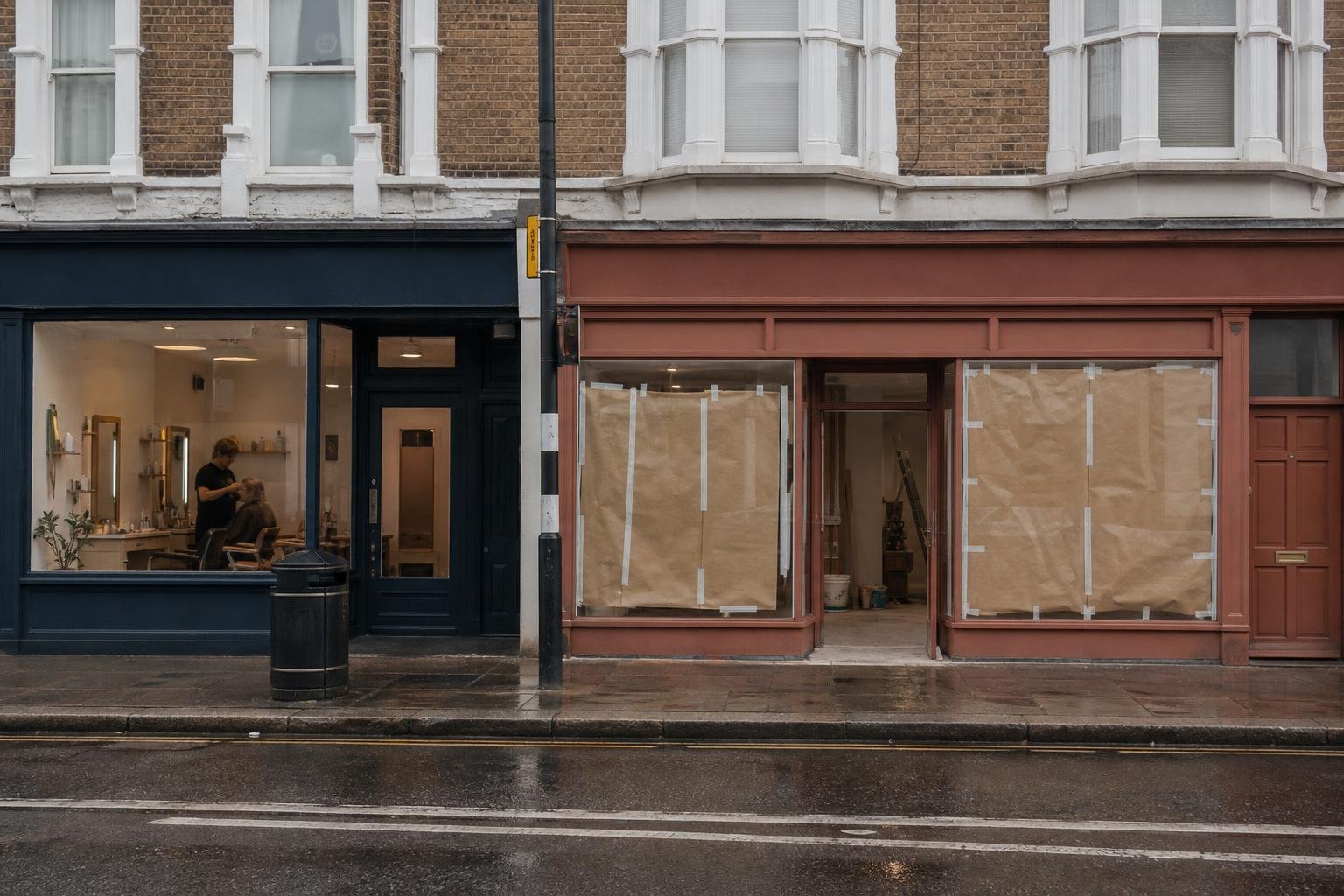
The clients who have been coming to you for years are not the ones you lose. What a new salon takes first is the undecided: the people who were going to search for a hairdresser this month and had not picked one yet. That is why the book can look thinner while nobody has actually left.
So before you print a leaflet or knock money off a colour, work out which of those two things has happened. They have different fixes, and only one of them is urgent.
Work out what you have actually lost
Open the book and count two numbers. Take the three months before they opened, and the three months since.
First, how many first-time clients came in each month. Second, how many of your regulars left without booking the next one.
If the first number has fallen and the second has held, you have not lost clients. You have stopped being the one who gets found by the people who were still choosing. That is the cheaper problem, and it is the one the rest of this is about.
If the second number has fallen, the new salon is the occasion and not the cause. Nobody who has sat in your chair for six years leaves over a paint job two doors down. They leave over a wait, a colour that did not last, or a price rise nobody mentioned. Ring three of them and ask. Not to sell them anything, just to ask.
Most books show a bit of both. Count anyway. It decides where the next hundred pounds goes.
One honest caveat before any of it. If your weeks are already full, or you could not take fifteen more clients next month if they walked in, the new salon has not cost you a thing yet and none of this is your problem.
Why the new place seems to be everywhere
Some of that is their marketing. A fair bit of it is just how Google treats a business that has only just opened, and it is worth knowing, because it runs on a clock.
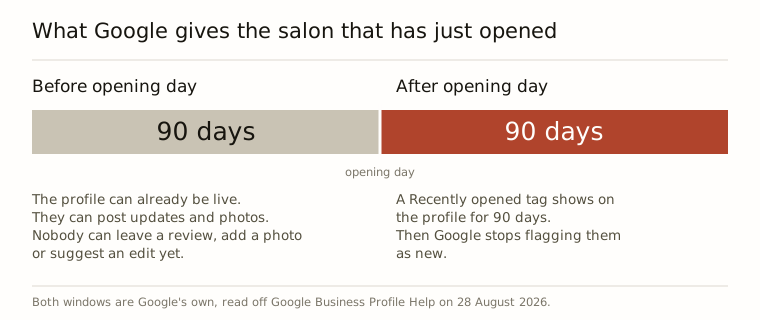
A salon that has not opened yet can create a Business Profile and set a future opening date, and once it is verified the profile shows up on Google 90 days before that date. In that window they can post updates and add photos, so the fit-out itself becomes something to look at. At the same time, nobody can post a review or a photo on that profile, or suggest an edit to it, until the business officially opens. Once it does open, the profile carries a Recently opened tag for 90 days.
So the newcomer gets roughly six months of Google pointing out that they are new, and for the first half of it nothing anyone else says can appear there. Then it stops.
You cannot get that window back, and you would not want it. What you have instead is the thing they will not have for years, and most salons leave it sitting in a listing they have not opened since the day they claimed it.

Your listing is the part you control
To show up on Search and Maps at all, you have to add or claim the business and then verify it. If you did that once years ago and never went back, this is the hour that matters most this month. Google reviews changes before they go live, so it is a quiet Tuesday job rather than a panic on a Saturday morning.
Start with your opening date. Only the month and year are needed, and a business that is already open can add the date it opened. Google uses opening dates in some places on Search to tell people how many years a business has been going. Eleven years on the same street is not something the shop with the brown paper in the window can copy this year, or in ten.
Then work down the rest:
- Categories. One primary category and up to nine more. Pick the specific one that says what you actually do, and do not use the boxes as keywords. Google’s own guidance says not to.
- Photos. An exterior shot helps people recognise your door when they arrive. Take one on a bright morning.
- Hours, including special hours for bank holidays and the week between Christmas and New Year.
- Your description, up to 750 characters. Google asks for what you offer, what makes you special and how long you have been in business, and asks you to keep it off promotions and prices.
Ask for reviews without breaking the rule
Someone standing between two salons on her phone reads the reviews, and the new place is starting from none.
Inside your profile, Read reviews and then Get more reviews gives you a link and a QR code, though the QR code only generates on a computer and not on a phone. Google’s own suggestions for where to put them: on receipts, in thank-you emails, at the end of a chat, and printed and displayed in the shop.
The trap is the obvious one. Offering anything in exchange, money off, a free treatment, a bottle of something, is what Google calls fake engagement, it says it is strictly prohibited, and it has a page on the restrictions that can follow. Asking at the desk while she is happy with her hair is free and it is allowed.

Do not match their opening offer
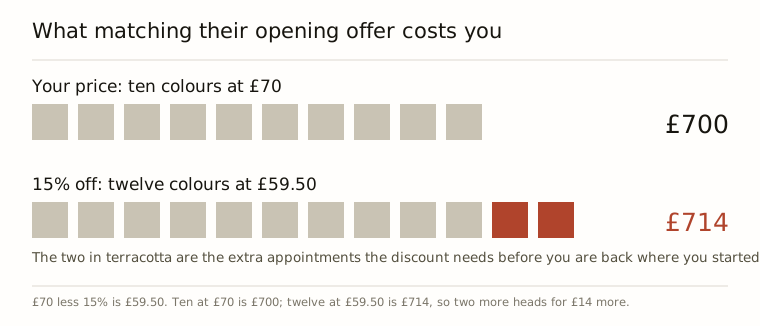
Say a colour is £70 and you take 15% off to hold your ground. That is £10.50 out of every one, and it does not come off the tube, the rent or the hour. It comes off the part that was yours.
Ten of those was £700. At £59.50 you need twelve appointments to pass it, and twelve is £714. Two more people in the chair, two more hours of your hands, for fourteen pounds.
The other half of it comes in the spring. Their opening offer ends and their prices go back up. Yours do not, because yours stopped being an offer and became your price list, and the clients who came for £59.50 are the ones who leave for the next £59.50.
Where paid search fits
The listing is free and it is the first job. What it does not do is put you in front of someone typing balayage and the name of your town into a phone at nine at night, which is exactly what a new salon with a budget will be buying.
That part is what we do. Google Ads for hair salons, barbershops and chair renters, built and run without you: £15 to £149 a month depending on your ad spend band, no commission on bookings, ever, fourteen days free and one click to cancel. Ten minutes of setup, 536 time-wasting searches blocked before your first click (courses, jobs, apprenticeships, free models, cheap, DIY, wholesale), and your Google listing gets fixed before we take a card.
Rachel Hartley at The Lockhouse, on £300 a month: “I’d tried boosting posts and it got me students. This got me eight colour clients in the first month and I didn’t touch a thing after signing up.”
The honest part: we cannot tell you which client came from which search, because the booking systems do not hand that back. We count calls, form enquiries and clicks through to your booking page, and we say which is which.
Three things not to do this month
Do not run them down to clients. She reads people for a living and it tells her more about you than about them.
Do not rebrand in a hurry. A name change after your profile is verified can mean verifying the business again, and you would spend the week arguing with Google instead of filling your Tuesdays.
Do not go quiet. The worst month to stop being visible is the month somebody else started.
Questions people ask
Should I go in and introduce myself to the new owner?
Most people do, and it costs nothing. You are going to share a pavement and a postman for years. It also tells you plainly what they charge and who they are aimed at, which beats guessing from their window. Go once, early, then get on with your own week.
Should I put my prices on my Google listing?
There is a services editor for exactly that, where your services and their prices are kept, and it is the right place for them. Keep them out of your business description: Google asks you to focus that field on the business rather than on promotions, prices or sales, and caps it at 750 characters.
A review has appeared that I think came from a rival. Can I get it taken down?
You can flag it if you believe it breaks Google's content policies, and the help centre has a page for reporting one. Disliking it is not enough. Reply either way. You have to be verified before you can reply at all, and Google checks replies first, usually inside ten minutes, though it can take up to 30 days.
One of my stylists has gone to work for them. Do I tell her clients?
Tell them the truth if they ask, in one sentence, and say who is looking after them now. Do not make anyone choose sides on the phone. Some will follow her and some will stay for the shop, and the ones who stay are the ones to ring when a cancellation leaves you a gap.