
Leaving Treatwell or Fresha to take your own bookings

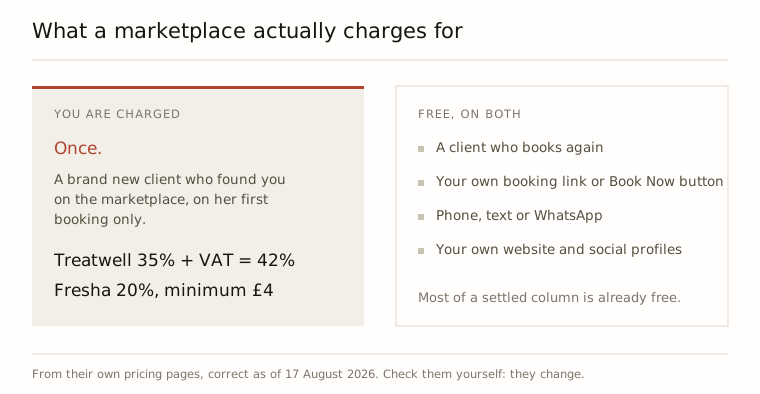
If most of your column is regulars, leaving saves you less than you think. Neither platform charges you for a returning client, and neither charges for a booking made through your own link. The fee lands on one thing: a brand new client who found you on the marketplace and booked there.
So the decision comes down to how many new clients you’re buying each month, and what each one is costing you. Here are the actual numbers, and the sum to do before you close anything.
What each one charges
Both sets of figures below are from their own pricing pages, correct as of 17 August 2026. Check them yourself before acting on this, because they change.
Treatwell takes 35% of the first booking made by a new client it introduces from the marketplace, and its commissions and fees carry VAT on top. That works out at 42% of that first appointment. Repeat bookings are 0%. Anything booked directly with you, by phone, text or WhatsApp, or through the Book Now button on your own site and social profiles, is free. If the client pays online in advance, a 2.5% plus VAT processing fee applies to that booking. Both the Freelancer and Advanced plans say “start for free”, and the page mentions a monthly fee without printing the number, so ask what yours would be.
Fresha takes 20% once from a new client who discovers you through its marketplace, with a minimum of £4 per client. Returning clients are free, and so are bookings through your own link, Facebook, Instagram and Google. The software is no longer free: Independent is £14.95 a month for one person, Team is £9.95 per bookable team member per month, both with a 7 day trial. Card payments run at 1.40% plus 25p online and 1.19% plus 20p in person.
What that is in pounds
On a new client’s first appointment:
| First booking | Treatwell (35% plus VAT) | Fresha (20%) |
|---|---|---|
| £25 fade | £10.50 | £5.00 |
| £45 cut and finish | £18.90 | £9.00 |
| £150 full head of colour | £63.00 | £30.00 |
| £280 balayage | £117.60 | £56.00 |
Below about £20 the Fresha minimum takes over, so a £12 fringe trim costs £4 of it. That is the bit that stings a barbershop and barely registers on a colour column.

The fee is the price of one new client
The forum answer is that they’re robbing you and you should get out. The vendor answer is that it’s marketing and it pays for itself. Everyone saying either one is selling something.
The accurate version is duller. That fee buys you one new client, once. Sixty-three pounds on a first full head of colour is 42% of a single appointment, and she may book many more before she stops coming. If she comes back every ten weeks for three years, you paid it once and nothing since.
And you only pay it when somebody actually books. That is a genuine advantage the marketplaces have over every other way of finding clients, ours included. An advert costs the same whether it fills the chair or not.
The catch is that you pay the same rate on the ones who never come back, and you don’t get to pick. You can’t tell in advance which is which, so you’re buying the whole batch.
The sum worth doing
Open last month and count two things:
- How many first bookings came through the marketplace, and what they cost you in commission.
- How many of those people have been back since.
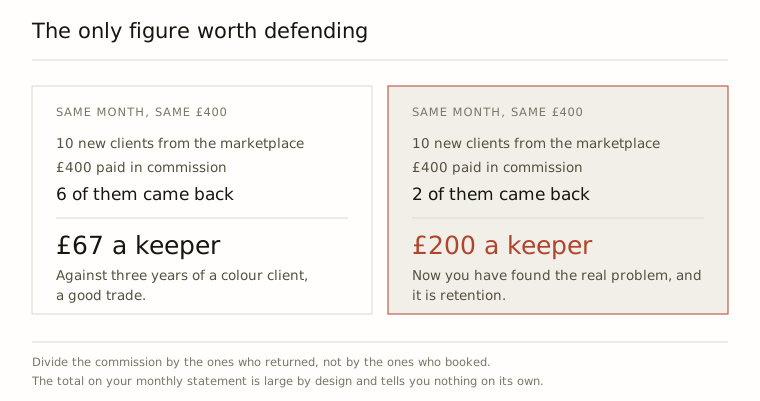
Divide the money by the ones who returned. That’s what a kept client actually cost you, and it’s the only figure in this argument worth defending. Ten new clients costing £400 in commission, six of them back in the chair, is £67 per keeper, once. Against three years of a colour client, that’s a good trade. The same £400 with two coming back is £200 a keeper, and now you’ve found the real problem, which is retention rather than commission.
The total on your monthly statement is a different figure entirely. It’s large by design and tells you nothing on its own.
Where leaving goes wrong
The order matters here. Close the account first and you find out afterwards where your new clients were coming from. A marketplace is a shop window with a lot of paid search behind it. Take yourself out with nothing in its place and the regulars stay, because they were free anyway, while the new faces stop.
So don’t leave first. Build the replacement, check it brings anyone in, then decide. It costs you two months of overlap and saves you a bad winter.
There are also three situations where staying put is the right answer:
- You’re already full. You’re not buying new clients, so the fee should be near nothing. If it isn’t, you’re paying to be found by people you can’t fit in, which is worth a look on its own.
- You’re near the £90,000 VAT threshold. Crossing it takes an effective fifth off your turnover in a business with very little to reclaim. Plenty of owners around that line genuinely don’t want more new clients this year. That’s a real position, not a lack of ambition.
- The marketplace is your only shop window. Then it’s doing a job nothing else is doing. Replace it before you close it.
The order that works
- Finish your Google listing. It’s free, and it’s where somebody who has heard your name goes first. Every service listed, correct hours, recent photos, a reply under every review. We sort this out before you get a card out.
- Put your own booking link everywhere. Both platforms give you one and neither charges for it. Instagram bio, Facebook, your Google listing, the bottom of every reminder text. Every regular who books that way costs you nothing today, on either platform, without changing anything else.
- Then buy new clients deliberately. Under about £100 a month, don’t bother: it’s too thin to fill anything, and we turn that budget away rather than take it. Above it, a search click for hair colour runs around £2.20 on our own numbers, and the client is yours from then on, with nothing owed on her second visit or her twentieth.
Do step two this week whatever you decide about the rest. It’s twenty minutes and it moves clients you already have off the marketplace, which is where most of the saving is.
One honest note on counting. Neither platform tells you which client came from which search, and neither do we. What can be counted is calls, enquiries and taps through to booking, and anyone promising you a cleaner number than that is guessing.
The forty-second assessment shows what people near you are searching for and what an enquiry should cost, before you change anything at all. No account, no card.
Questions people ask
Do my reviews come with me if I leave?
No. Reviews written on a marketplace stay on that marketplace and will not transfer to your Google listing. That is the strongest reason to build Google reviews in parallel long before you decide anything, so that leaving is not also starting from zero.
Can I take my client list with me?
Export it before you close anything, not after. Check what the platform actually lets you take out and do it while the account is still open. Whatever you cannot export you still have in your own diary and your own phone, which is usually more than people expect.
Do I have to leave completely, or can I do both?
You can do both, and it is often the sensible order. Keep the listing while you build your own bookings up, then decide. Leaving is far easier to judge once you can see what your own channels bring in without the marketplace behind them.
Should I tell clients I am leaving the platform?
Tell the ones who book through it, before the account closes rather than after. A text with your number and your booking link is enough. The ones who like you will move. The ones who only ever booked whatever was cheapest that week were never really yours.