
How to get clients as a mobile hairdresser
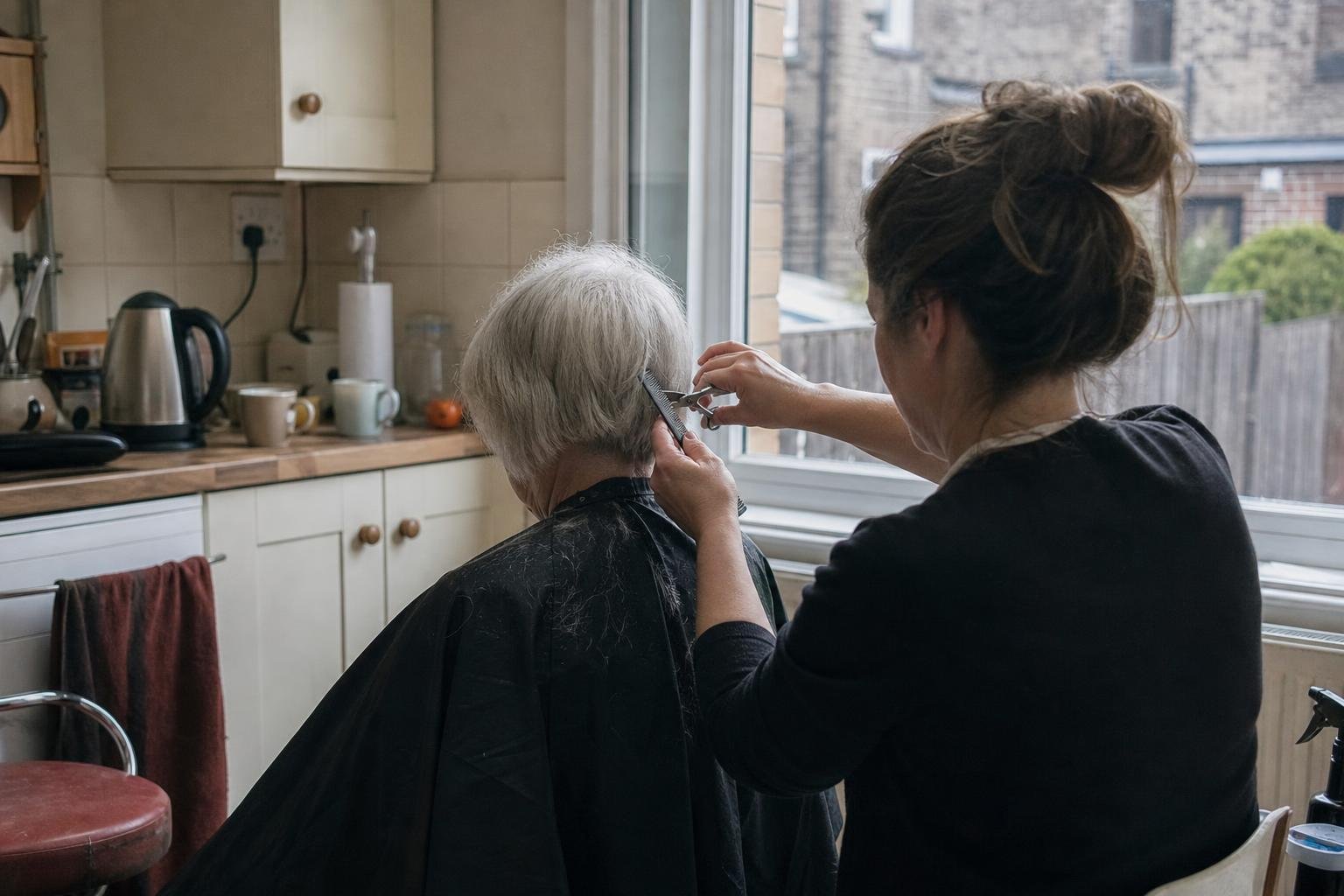
Most mobile hairdressers find their clients the old way: somebody’s mum, somebody’s neighbour, a name passed on at the school gate. That works, but it only reaches people who already know one of your clients. The woman who has just moved in, or whose usual hairdresser has retired, does something different. She types mobile hairdresser near me into her phone, and she can only find you if you have a Google listing set up for a business with no shop. To get clients as a mobile hairdresser from strangers, that listing is the first job, it costs nothing, and Google has rules for it that most people never read.
Two kinds of new client
Word of mouth brings good clients because they arrive already vouched for. Its limit is that it travels through people: if your clients mostly live on one estate, so do their friends. That can be exactly what you want, as you will see further down.
A search is different. Nobody vouched for you, so she decides on what Google shows her: your name, the areas you cover, your reviews, and whether you pick up when she rings. Most pages that answer this question explain how to become a mobile hairdresser. Very few say how a stranger finds you once you are one.
A Google listing without a shop
Google has a name for what you are: a service-area business. Its help page describes one as a business that visits customers but “doesn’t serve customers at their business address”, and gives cleaners and plumbers as examples. A mobile hairdresser fits the same description.
Three rules on that page matter most:
- Take your address off. In Google’s words: “If you don’t serve customers at your business address, remove your address from your Business Profile.” Your home address stays private.
- List areas, not a circle. You can set up to 20 service areas, by town, postcode or district. Google no longer lets you set a radius around where you live.
- Do not stretch it. Google says the edge of your overall area “shouldn’t be more than about two hours of driving time” from where you are based.
You also get one profile, not one per town. Google says a service-area business “can only have one profile for the whole area that they serve”.
If you also see some clients in a room at home, Google’s test is signage. A business without “permanent on-site signage” is not eligible as a shop front and should be listed as a service-area business. Most homes have no sign out front, so they stay a service-area business too.
Pick your areas for the drive, not the map
Two hours of driving is Google’s ceiling, not a target. Every minute between clients is a minute nobody pays you for, and the areas you list are where strangers will ring you from.
Here are made-up round numbers, so put your own in. Say you do four clients in a day, 90 minutes each. That is five drives: out to the first, three in between, and home. If your clients are spread out and each drive takes 25 minutes, you spend 125 minutes in the car. If they are close together and each drive takes 10 minutes, you spend 50. The difference is 75 minutes, most of a fifth appointment, every working day.
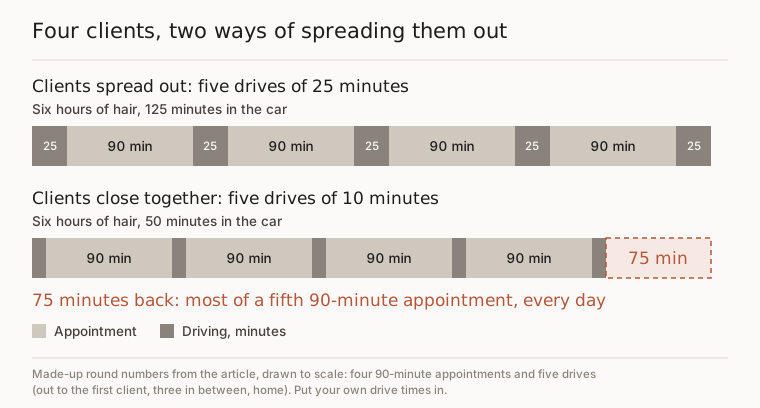
So list the towns and postcodes you would happily drive to on a wet Tuesday, not every place you could reach. Start where your existing clients already are, so word of mouth and Google fill the same patch. Google says approved changes to your areas can take up to 48 hours to show.
Your name, your services and your reviews
The name. Use the name you actually trade under, the one on your cards and your invoices. Google’s guidelines say adding unnecessary information to a business name “isn’t permitted, and could result in the suspension” of your profile, and they list service words and location words among the things not to add. So Mobile Hairdresser Leeds is a problem unless that is genuinely what you are called. The areas go in the service area and the services go in the services list.
The services. Fill in the services list with what you really do: cuts, colour, blow-dries, wedding hair. It helps Google match you to what people type, and Google’s page on reviews for service businesses says a reviewer may be asked which job you did, with the choices drawn partly from that list.
The reviews. Google’s local ranking page says results are “mainly based on relevance, distance and popularity”, and that how well known a business is depends partly on “how many reviews you have”. It also says there is “no way to request or pay for a better local ranking”. Reviews do extra work for you, because a stranger is deciding whether to let you into her house. Google lets you make a review link or QR code from your profile. Text it the evening after the appointment, while she is still pleased with her hair.
Getting verified with no shop front to film
Before the listing works properly you have to verify it, and Google picks the method, not you. If it offers a video, you record it live on your phone through your Business Profile. Google’s video page has a section written for service-area businesses, and it asks for three things:
- Where you operate. Street signs or landmarks near where you are based. If that is your home, Google says landmarks and signs in your immediate neighbourhood will do.
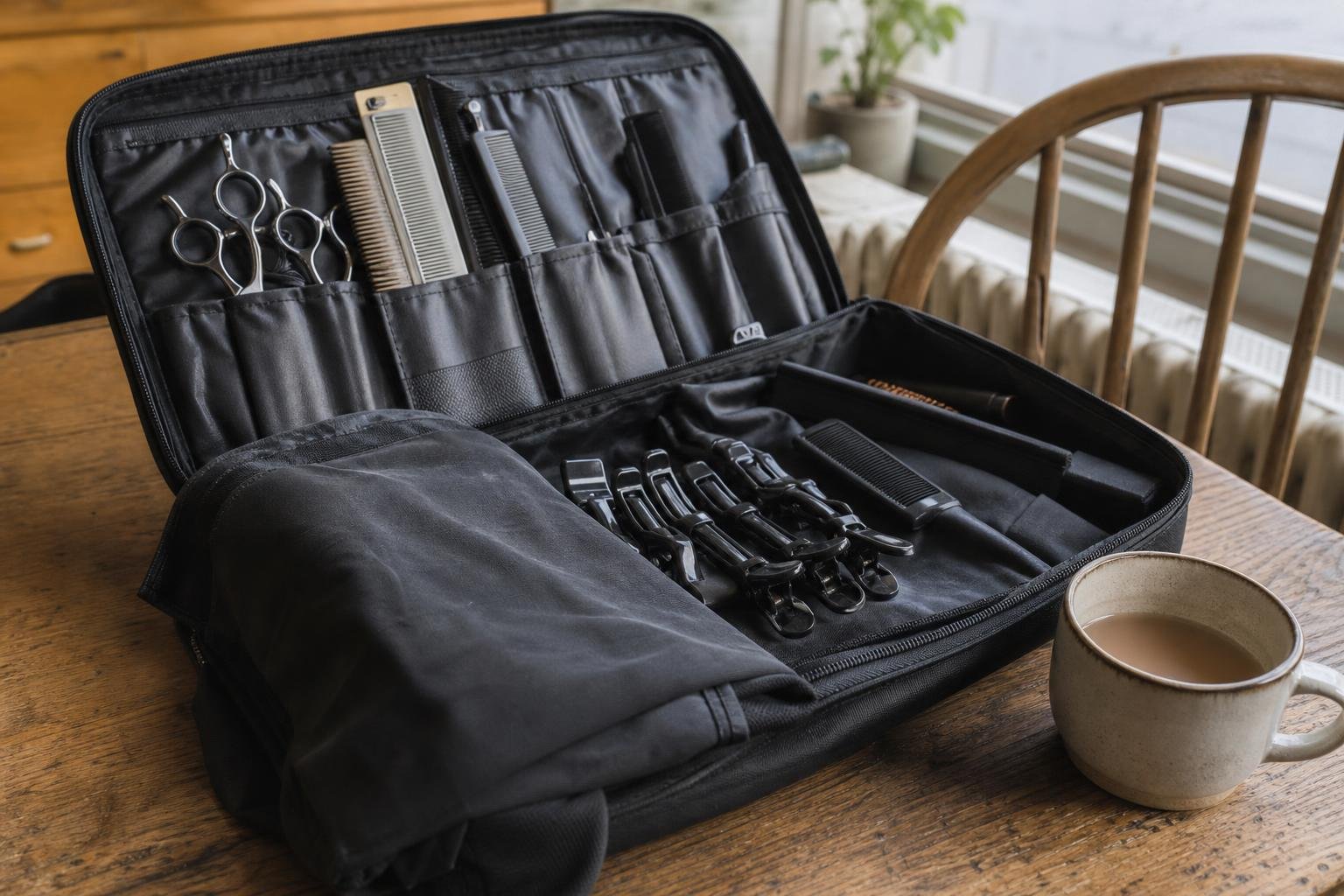
- That the business exists. Your tools and equipment, business cards, branded clothing.
- That you run it. Google suggests recording yourself performing a service, or showing a document such as an invoice that matches the name on your profile.
That last point is another reason to list the name you really trade under. The video has to be at least 30 seconds in one unbroken, unedited take, and it must not show other people’s faces. So if you film yourself cutting hair, film your hands and the back of your client’s head, not her face.
Should a mobile hairdresser pay for Google Ads?
Maybe not yet, and we would rather say so. We run Google Ads for hairdressers, and we turn away anyone who can only spend under about £100 a month, because below that there is rarely enough money to learn which searches turn into bookings. Plenty of mobile hairdressers sit under that line, and for them the free listing is the better first job. More on that in whether Google Ads are worth it for a small salon.
If you are past it, two things are different for you. You do not need a shop to advertise: a campaign shows in the areas you choose. And the edges are soft. Google’s location targeting page says that when you target an area, it may also show your ad in “nearby, closely related areas”, and gives the suburbs of Manchester as its example. For a high street salon that is a few more people who might walk in. For you, it can be a booking you would never have chosen to drive to. So keep the ad’s areas tighter than your listing’s, and note where each enquiry actually lives.
If your listing exists but never seems to appear, the checks in why a salon does not show up on Google Maps apply to you too. Google’s help pages quoted here were read on 15 October 2026.
Questions people ask
Can I give clients a discount for leaving a Google review?
No. Google's own help page on getting reviews says offering free or discounted services in exchange for posting, changing or removing a review counts as fake engagement and is strictly prohibited. Ask without the discount. Sending the review link from your profile the evening after an appointment is allowed, and it is enough.
How long does Google take to verify a mobile hairdresser's listing?
Google says verification reviews take up to five working days, and on rare occasions longer. If a video is turned down, Google tells you why and you can record another. The new one has to show everything the first one did, plus whatever was missing.
Do I need a website before I set up a Google listing?
No. Google's guidelines ask for a phone number that connects to your business or a website that represents it, so a number you actually answer is enough to start. The number has to be under your direct control, which your own mobile is. A website can come later.
I also rent a chair two days a week. Can I have two Google listings?
Usually not. Google's guidelines say there should be one profile per business, and a service-area business gets one profile for the whole area it covers. Google does allow a hybrid listing that shows an address as well as a service area, but only where that address carries your own permanent signage.
